The Grand National

grandnational.org.uk is your complete guide to the Aintree Grand National and an indispensable aid to finding the winner of the most famous and prestigious horse race in the world.

It contains everything you need to know about this magical race which is one of the highlights of the entire sporting year. Indeed the four-and-a-half mile marathon event captures the imagination of millions around the world, thanks to its ability to consistently produce thrilling finishes and heart-warming stories, as horse and rider try to conquer the mighty Aintree fences.

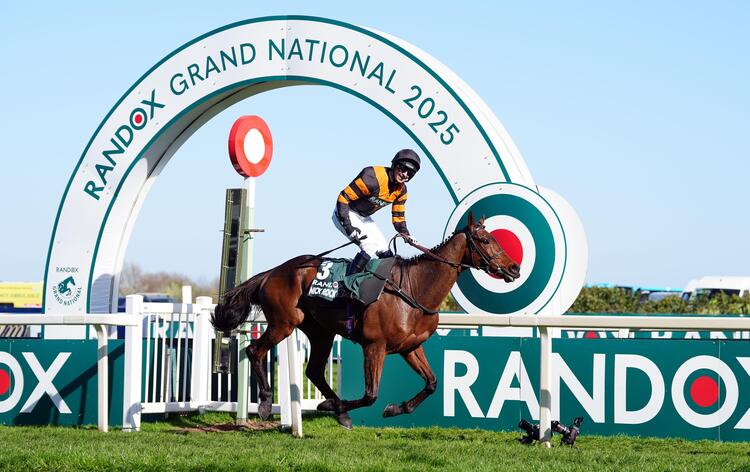
Neptune Collonges has won the 2012 Grand National, beating Sunnyhillboy in the closest ever finish in the races 173-year history. The grey, ridden by Daryl Jacob, got up in the last stride to win after a photo finish (below) to give champion trainer Paul Nicholls his first Grand National winner.

Katie Walsh was third on Seabass - the highest ever finish for a female jockey, with Cappa Bleu in fourth. Amazingly, all four were in the top five Grand National tips in our 2012 Race Preview - including the 33/1 winner - and we have now tipped four of the last nine winners. For regular free tips CLICK HERE to visit our race tips website.

Daryl Jacob said: "You can't beat this. I was on a tough horse and I said to Paul that one day I'd ride you a National winner. That was two years ago and now I've done it."

Tragically two Grand National runners suffered fatal injuries - Cheltenham Gold Cup winner Synchronised and According to Pete both fractured legs in the race and had to be put down by vets following falls despite several modifications this year designed to increase safety whilst retaining the element of danger which is part of the Aintree spectacle. The British Horseracing Authority has released a statement saying it was still investigating the incidents in this year's race but pointed out Synchronised fractured his leg further down the course after unseating Tony McCoy at Becher's Brook whereas According to Pete was brought down by another horse.

The statement added: "We believe it would be premature to suggest that modifications to the course and other changes have not been effective or will not yet prove to be effective. The Grand National is a unique race and it represents a unique challenge for the sport and for its regulation.

"It is a thrilling spectacle, but there is a higher degree of risk involved in the Grand National than other races and for this reason everyone in the sport needs to be conscious of how the race is presented to the public, the general consumer perception and their views of how the race is run."

Owner John Hales had mixed emotions as One Man, probably the best horse he ever owned, was killed in a fall over the smaller Mildmay course at the Grand National meeting in 1998: "When he crossed the line I thought he might have got it...I thought thank you Aintree - you know why - many years ago. It split the family coming here. My wife was 50-50, my daughter couldn't face it. We've nothing against Aintree, we love coming here and this year we've come up trumps."

Neptune Collonges goes down in history as the first grey to win the Grand National since Nicolaus Silver in 1961 and was retired on the spot by Hales.

In many ways it is the history of this great event that makes it so special and the race has made the likes of Red Rum, Aldaniti, Jenny Pitman and Ginger McCain household names. Given the race’s long history, it is no surprise that many amazing milestones have been reached and many remarkable stories have unfolded.

For example, no horse has run in the Grand National more times than Manifesto, who competed in eight renewals of the event between 1895 and 1904, winning the race twice, in 1897 and 1899, and finishing third on three other occasions.

Jenny Pitman was the first woman to train a Grand National winner, capturing the race for the first time with Corbiere in 1983. She succeeded again with Royal Athlete in 1995 and finished second with Garrison Savannah in 1991. In 2009, Venetia Williams became the second woman to saddle a National winner, with Mon Mome.

Plenty of the race’s most fascinating stories revolve around its fearsome obstacles. Did you know that the least number of horses to complete the race is two, in 1928: Tipperary Tim and Billy Barton (who remounted)? Likewise, in 2001, when Red Marauder beat Smarty, only four of the forty horses completed, with two of these having to be remounted.

See our Grand National History and Facts and Figures sections for more Grand National stories - charting this most famous of horse races down the years.

With history in mind, we are advocates of learning lessons from the past when trying to find the winners of the future. Thus, our site includes a Grand National Trends section dedicated to identifying those vital statistics that all successful horses have had in common.

For example, did you know that only Red Rum has managed to carry more than 11st 5lbs to victory since 1957? Bad news for the top 5 horses in the handicap today!

Just as noteworthy is the fact that no seven-year-old has won for more than 70 years and we have to go back to 1915 to find the last successful six-year-old. In fact, since 1992, only four of the six and seven-year-olds to take their chance have even completed the course. Experience, therefore, counts in the Grand National and 13 of the last 16 winners (including the last 7) were aged either 9 or 10. In that period there has also been one eight-year-old, one eleven-year-old and one twelve-year-old winner, although the last teenager to win the race was 89 years ago (Sergeant Murphy in 1923) and none have made the frame since 1969.

For those wanting to see this magnificent event live, we have all of the information you’ll need to make the most of your visit to the Grand National, including information on getting to Aintree, ticket details, and a summary of all of the enclosures and facilities at the racecourse, many of which have been significantly upgraded in recent seasons.
The Aintree Grand National was first run in 1839 and the famous four-and-a-half mile marathon now attracts a worldwide television audience of 600 million people.

Bruce Hobbs, aged 17, was the youngest winning jockey in 1938, on Battleship - the smallest horse ever to win. Dick Saunders, aged 48, was the oldest successful rider on Grittar in 1982, his first and only Grand National ride - after which he announced his immediate retirement.

As well as its fascinating past, Aintree’s unique course contributes to the mystique surrounding the event. The fence-building programme starts approximately three weeks before the Grand National meeting is run, with around 150 tonnes of spruce branches sourced and transported from forests in the Lake District. Each fence is made from a wooden frame and covered with the distinctive green spruce.

The Grand National course remains the ultimate test of horse and jockey. The race comprises two full circuits of a 2¼ mile (3,600 metres) racetrack, where challengers face 30 of the most testing fences in the world of jump racing including Becher’s Brook and The Chair, now two of the most well known landmarks in the country.

When it was first run at Aintree in 1839, the race featured a solid brick wall as one of the obstacles, although that was abandoned after five years.

Becher's Brook, the sixth fence on the first circuit, was named after Captain Martin Becher who was unseated from his mount, Conrad, and fell into the ditch when leading in the first ever Grand National in 1839. "Water tastes disgusting without the benefits of whisky" he reflected and the obstacle bore his name from that day onwards.

The Grand National is also one of the rare major sporting events in which amateurs still can, and do, take on professionals.

This applies to both trainers and jockeys and in the 164 runnings of the Grand National it has been won on no less than 41 occasions by a horse ridden by an amateur jockey, although it's been 22 years since Marcus Armytage won in record time on Mr Frisk in 1990.

That this is the case is hardly surprising as the sport has become ever more professional and the prize money, which is now almost £1 million, has risen so dramatically that few trainers or owners will entrust potential winners to jockeys still perceived in some quarters as to be inexperienced or part-timers.

However, part of the Grand National's enduring charm is not the amateurs who succeeded, but those riders from the Corinthian ranks whose fruitless, and often hopeless, attempts to conqueror the fearsome fences that have added so much colour to the event. They have included: the Duque de Alberquerque, Tim Durant, Aidan O’Connell and Brod Munro-Wilson - a mix of playboys and men who worked as deep sea divers for six months a year and spent the other six trying to win the National. We may not see their like again, but the amateur’s long love affair with the Grand National is not over yet, proven by last year's runner-up Oscar Time - who was ridden by amateur jockey and millionaire businessman, Sam Waley-Cohen.